

- A more accurate appraisal starts with better inputs, not more steps
- Missing key details early can lead to unexpected costs and weaker ROI
- Small improvements in how you appraise can lead to more consistent, more confident decisions
An appraisal is more than a number. It is one of the first decisions that shapes the potential ROI of a vehicle.
From acquisition cost to recon to pricing, the quality of your appraisal inputs directly influences how a deal performs over time. If the information behind that decision is incomplete or inconsistent, the impact shows up quickly. Unexpected costs, slower sales, and reduced margins can often be traced back to gaps at the start.
The good news is that improving results doesn’t require adding more steps or overhauling your process. In many cases, it comes down to improving a few key inputs that shape each decision.
Here are four ways used car dealers can create better alignment between their appraisal decisions, pricing strategy, and overall ROI.
Not All Used Car Appraisal Inputs Are Created Equal
A strong used car appraisal starts with the quality of the information behind it. For any used car dealer, visible condition is only one part of the picture, but it often drives the early decision.
Two vehicles can look nearly identical during a walkaround yet perform very differently once they move through recon. Incomplete inputs during the used car appraisal process can lead to missed issues that show up later as unexpected costs. Those gaps directly affect both front-end margin and overall ROI.
The challenge isn’t effort. Most used car dealers already follow a consistent appraisal process. The gap is often in what is not visible or not applied consistently across the team. When each appraisal is based on slightly different or incomplete data, the results become harder to predict and harder to manage across your inventory.
How to Protect Your Margins
Improving accuracy at this stage comes down to strengthening the inputs behind each decision. A more complete view of vehicle condition helps reduce guesswork and gives you a clearer starting point before recon, pricing, and merchandising decisions are made.
Without that level of visibility, you’re relying on limited information. That increases the risk of missed issues and reduces confidence in the number you put on the vehicle.
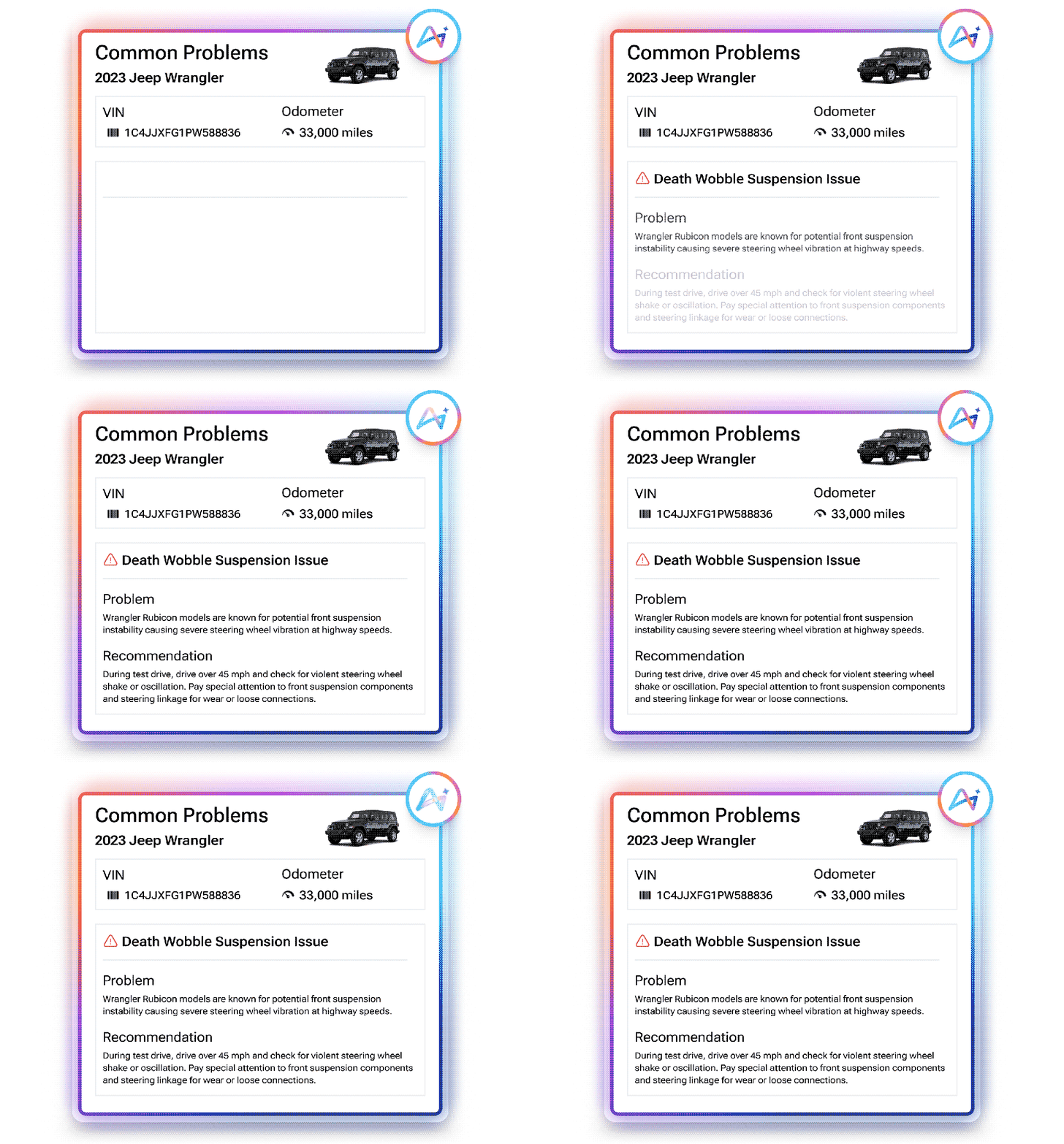
Access to vehicle-specific insights closes that gap. Capabilities like Common Problems, powered by Cox Automotive data, can surface issues commonly associated with specific vehicles and highlight areas where a closer look may be needed. When those signals are available early, it becomes easier to identify risk before it impacts the deal.
The result is a more consistent used car appraisal process that supports better decisions across your lot. Fewer surprises in recon. More confidence in your numbers. A stronger foundation for both margin and long-term ROI.
The Difference Between Surface Condition and True Vehicle Health
A vehicle may look clean on the outside, but that doesn’t always reflect its overall condition. For any used car dealer, understanding true vehicle health is a critical part of an accurate used car appraisal.
Many of the issues that impact profitability don’t show up during a standard walkaround. Mechanical concerns, internal wear, and early signs of failure are often missed at the appraisal stage. They tend to surface later, when recon is already underway, and costs are harder to control.
That data is critical. Without it, you’re guessing. And it could be an expensive guess.
A vehicle with unseen mechanical issues may lead to increased recon costs, extended timelines, and added uncertainty. What looked like a strong opportunity at acquisition can quickly become a tighter margin deal with less predictable ROI.
How to Protect Your Margins
Improving accuracy at this stage comes down to getting the data you need, now, full stop. For example, integrating OBDII data, supported by Cox Automotive data, can provide insight into engine performance, internal systems, and diagnostic trouble codes. This level of detail helps identify potential issues earlier and document factors that directly impact valuation.
A more complete dealer appraisal accounts for both visible condition and underlying vehicle health. That leads to more accurate cost assumptions, fewer surprises during recon, and better alignment between your used car appraisal, pricing decisions, and expected ROI.
Why Better Market Comparisons Lead to Better Pricing Decisions
Accurate pricing starts with accurate comparisons. For any used car dealer, the quality of your market comps plays a direct role in how you appraise and price each vehicle.
Not all comparisons reflect current market conditions. Relying on broad or outdated comps can lead to decisions that don’t align with real demand. In a fast-moving market, small gaps in pricing accuracy can slow turn and reduce the overall return on a vehicle.
Incomplete or misaligned market data makes it harder to get pricing right. That disconnect creates risk, which can lead to overpaying at acquisition, slower sales, or missed opportunities to maximize margin.
How to Protect Your Margins
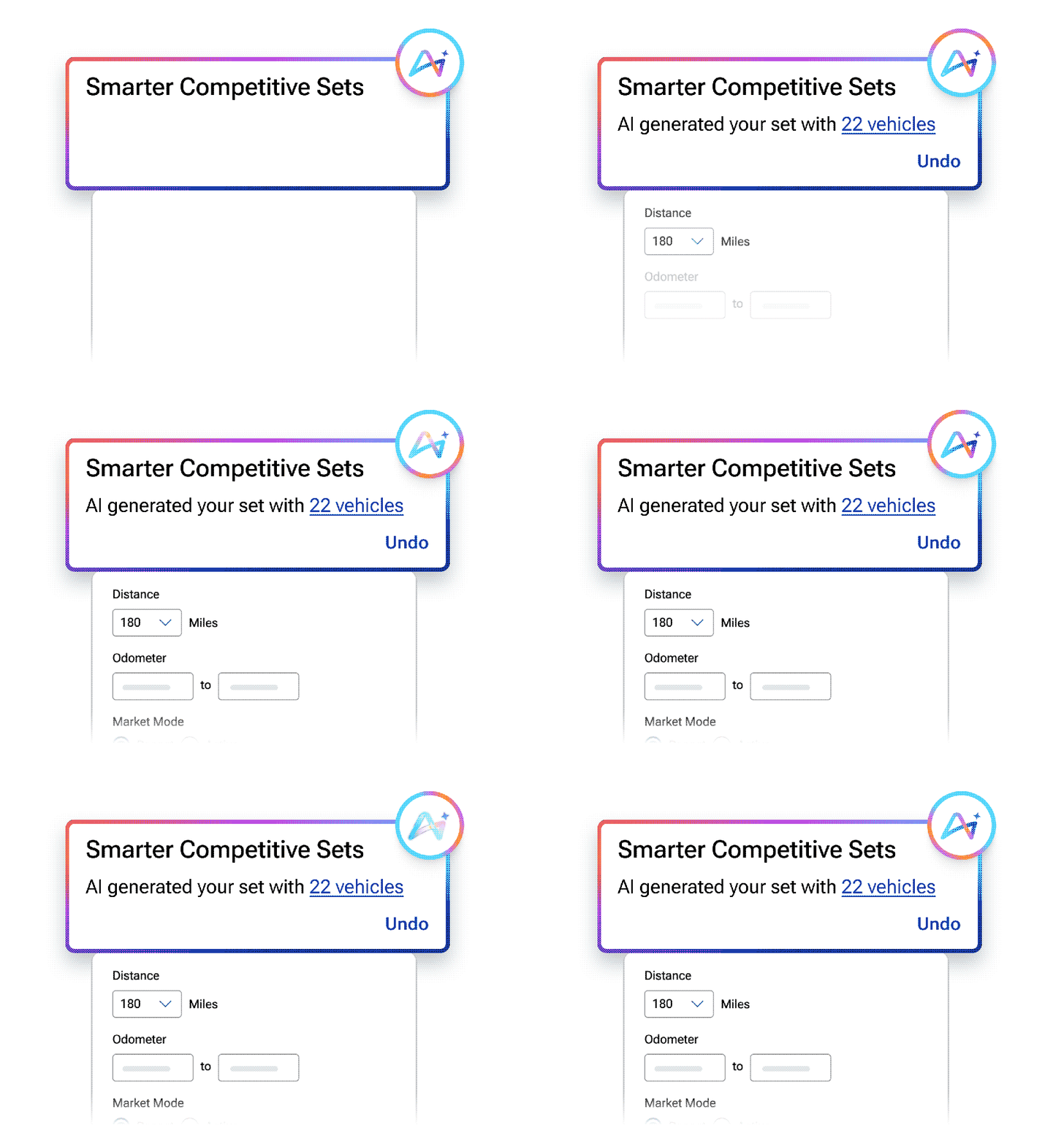
Improving accuracy all comes down to grounding your decisions in smart, accurate, and real-time market data. The closer your comparisons align to real demand, the more confident you can be in both your appraisal and pricing strategy.
Access to real-time market insights closes that gap. For example, Smarter Competitive Sets, powered by Cox Automotive data, use current shopping behavior and market activity to identify more accurate comparisons. That level of visibility helps ensure you are evaluating each vehicle against the right competitive set, not just a similar one.
Without that alignment, pricing decisions rely on assumptions about the market. With it, you are responding to real demand.
Stronger comparisons support stronger outcomes. More accurate acquisition decisions. Better pricing alignment from day one. A used car appraisal process that supports both faster turn and a more predictable ROI.
The Full Vehicle Story Matters More Than a Snapshot
A single data point rarely tells you everything you need to know about a vehicle. For a used car dealer, making an accurate used car appraisal often depends on understanding more than just current condition or pricing.
A vehicle’s history and lifecycle can reveal important context that is easy to overlook. How it’s been serviced, how it’s moved through prior ownership, and what activity has taken place over time can all influence its true value. Without that context, appraisal decisions are based on an incomplete picture.
When key pieces of information are missing, uncertainty increases. Gaps in its history can introduce risk that affect downstream performance. Risk can show up in recon, pricing decisions, or how the vehicle performs on your lot.
How to Protect Your Margins
Improving accuracy at this stage comes down to working with a more complete set of data. When you can see the full vehicle story, you can make more informed appraisal decisions with fewer unknowns.
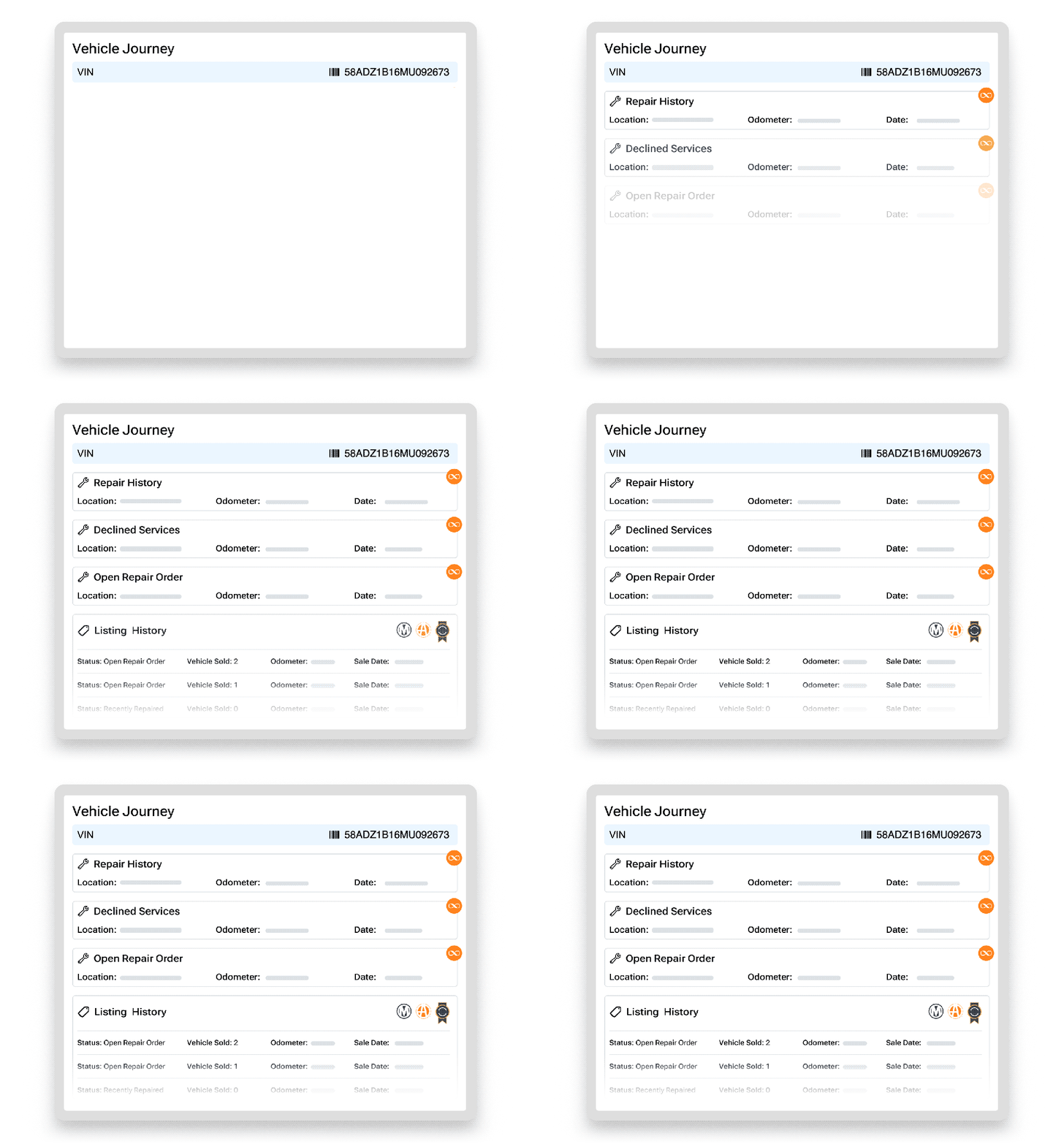
For example, the Vehicle Journey Report provides a VIN-specific view by combining data from Xtime and Manheim, helping bring together a more complete picture of each vehicle’s history.
Without context, you are making decisions with partial information. With it, you are making a more informed used car appraisal that reflects the full picture of the vehicle.
The result is greater consistency across your appraisal process. More confidence in acquisition decisions. Better alignment between your inputs, pricing strategy, and expected ROI.
Align Appraisal Decisions with Your Pricing Strategy
Even accurate appraisals can miss profit opportunity if they are not aligned to your pricing and profit strategy. An appraisal sets your starting point, but the outcome of the deal is shaped by how that decision connects to market pricing, inventory position, and demand. When those elements are not considered together, it becomes harder to balance competitiveness with margin and overall ROI.
How to Protect Your Margins
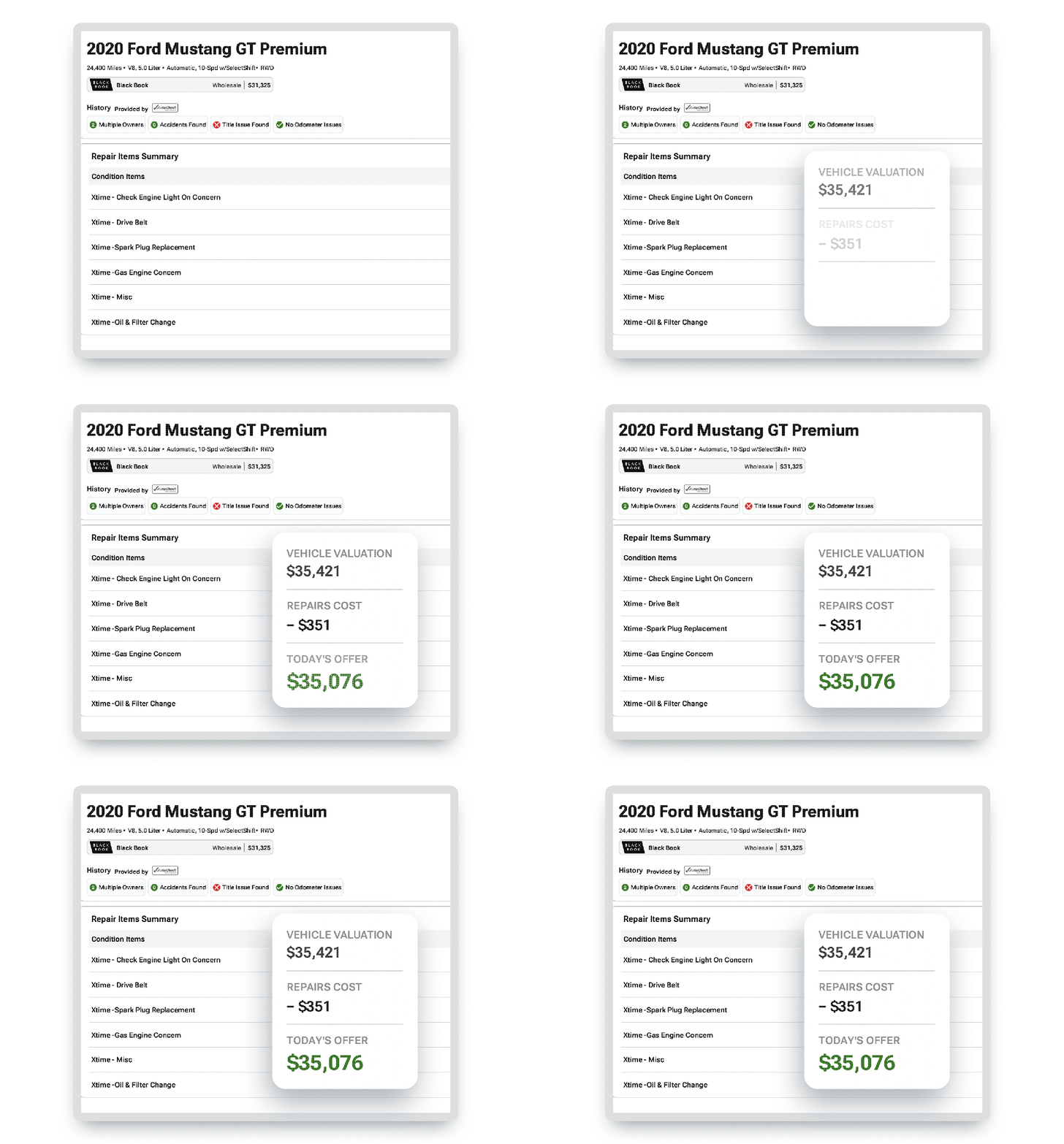
Improving results at this stage comes down to connecting your appraisal decisions to real-time market conditions and profit expectations. When pricing and appraisal work together, you can make more informed decisions about how a vehicle should be positioned from day one.
Access to AI-driven insights can help support that alignment. Capabilities within ProfitTime GPS, supported by Cox Automotive data, use current market demand and inventory conditions to help identify pricing strategies that balance competitiveness with profit opportunity.
Without that connection, pricing decisions are more reactive. With it, you can take a more informed approach that supports both margin and overall deal performance.
The result is a used car appraisal process that does more than establish value. It supports stronger pricing decisions, more consistent outcomes, and a clearer path to improved ROI.
Better Inputs Lead to better Outcomes
Every used car appraisal sets the direction for what happens next. From recon to pricing to how the vehicle performs on your lot, the quality of that decision starts with the quality of the information behind it.
Across each step, the opportunity is the same. Improve the inputs, and you improve the outcome. More complete condition insight helps reduce missed issues. Better visibility into vehicle health supports more accurate cost assumptions. Stronger market data keeps pricing aligned with real demand. A more complete vehicle story reduces uncertainty across the board.
Without the right data, appraisal decisions rely on assumptions. With it, you can move forward with more confidence in the number, the strategy, and the expected return.
Small improvements in how you approach the used car appraisal process can lead to more consistent decisions, fewer surprises, and stronger overall ROI over time.
Make Every Appraisal Decision More Informed
Ready to improve your used car appraisal accuracy, reduce unexpected costs, and make more confident decisions? vAuto brings the data and insights together in one place.
See how Provision helps strengthen the inputs behind each appraisal. And discover how ProfitTime GPS helps connect those decisions to pricing strategies informed by current market demand, inventory conditions, and profit opportunity.
Source:
1 vAuto Research 2025
2 vAuto + Dealertrack data, 2022–2023
3 vAuto data, April 2024